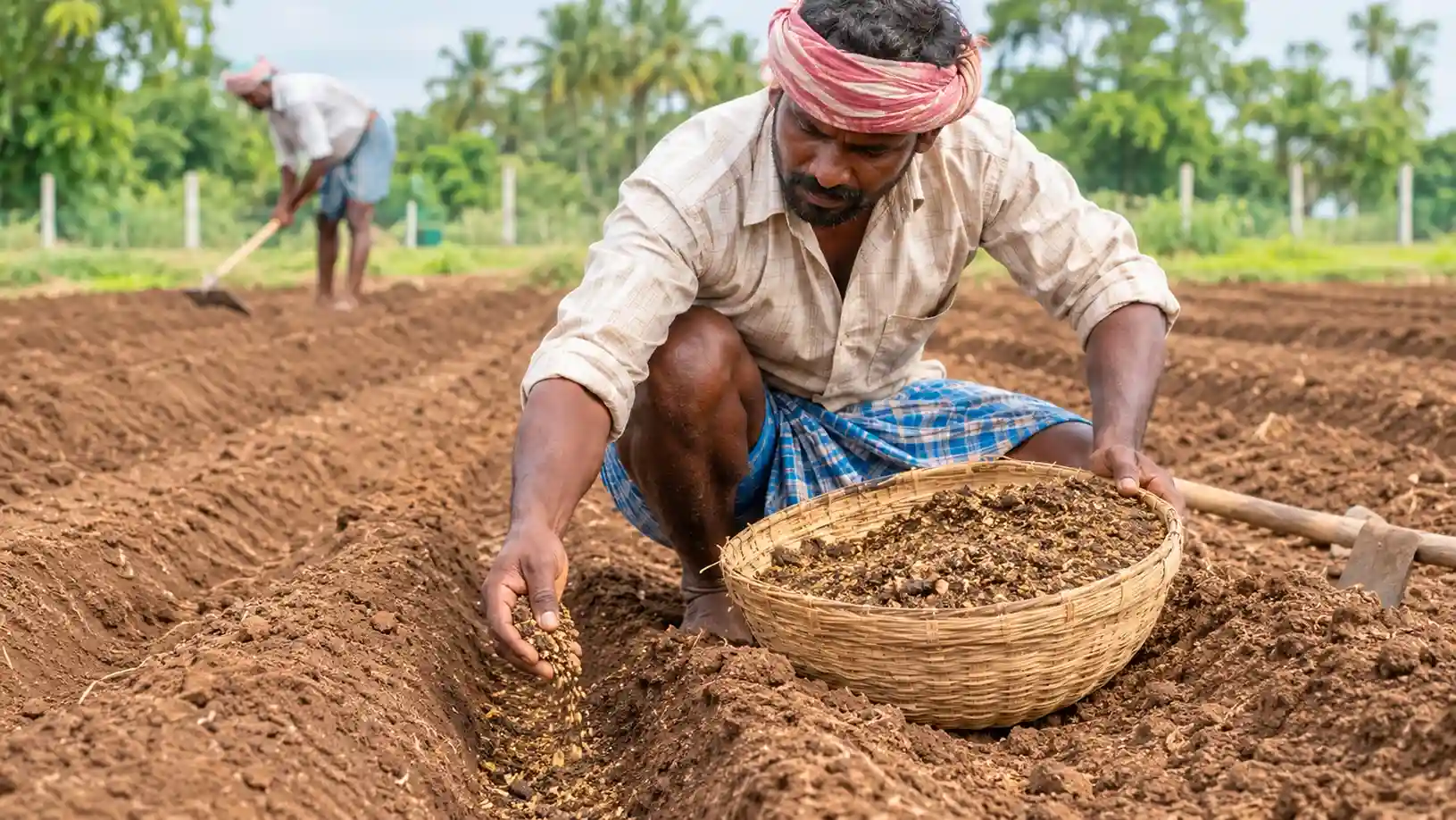
Before planting, scatter crushed neem seed over the ploughed field and work it into the soil, ahead of any sowing or transplanting.
This is a soil preparation step described in the product guide from Organic Shakthi, a natural farming brand in Nagercoil, Tamil Nadu. Young roots are tender, and in some fields soil insects damage them early, so fewer plants survive. Here is how to use crushed neem seed before planting, step by step.
Quick Facts On Crushed Neem Seed
| Category | Details |
|---|---|
| Used For | Getting the soil ready for a crop |
| When | Ahead of sowing or transplanting |
| How | Scattered evenly and mixed in |
| Crops Named in the Guide | Vegetable and cash crops |
Crushed Neem Seed Explained: Why Add It Before Planting
Crushed neem seed starts as whole neem seeds that are broken into small, coarse pieces. Many growers choose crushed neem seed for soil that is still being prepared, and they add it at the same time they level and loosen the land.
Why add it first? Young roots are tender, and some soil insects start feeding on them soon after sowing. Neem goes in early so the roots are looked after during their weakest stage. Protecting roots at this point is the main goal when people use neem seed for soil pests.
Want to see what it looks like? Visit the Crushed Neem Seed page. Our longer article on crushed neem seed for farming covers other uses.
When to Apply Crushed Neem Seed
Apply it during field preparation, before seeds go in or seedlings are transplanted. Treat it as part of getting the ground ready, something done before the plants arrive.
The product guide says pest activity is high during monsoon planting, so this step is often part of rainy-season field preparation.
What about the gap between mixing it in and planting? The product guide does not state a number of days, and it may depend on your crop and the weather, so ask the Organic Shakthi team.
How to Use Crushed Neem Seed Before Planting (Step by Step)
-
Get the land ready. Plough or loosen the soil the way you usually do for a new crop.
-
Work out the amount. Calculate the area in acres and weigh the neem using the range given below.
-
Scatter it evenly. Spread the crushed neem seed over the whole plot rather than leaving it in piles, so every part of the field is treated alike.
-
Mix it into the soil. Use your usual tools to turn it in, so none stays on the surface.
-
Give the soil time. Ask your local agriculture office how long to wait and whether to water, since this varies with the crop and the weather.
-
Plant. Sow your seeds or transplant your seedlings once the soil is ready.
How Much Crushed Neem Seed per Acre?
The guide published by Organic Shakthi gives a range of 2 to 5 kg per acre, and the amount is meant to go in once for each crop cycle. Your crop and your soil decide whether you need the low end or the high end, and your local agriculture office can help you choose.
Other websites show very different amounts. One reason is that neem cake and crushed seed are different products, so use advice written for the one you actually have.
Which Crops Is It Used For?
The guide mentions vegetable and cash crop fields, which are places where pests can show up as soon as planting is done. If your crop is something different, check with the Organic Shakthi team first.
Common Mistakes Farmers Make
-
Guessing the amount. Some neem guides warn that too much neem powder can harm young plants, so weigh it out and stay inside the range in your product guide.
-
Borrowing a number from another product. Neem cake and crushed seed are different, so their amounts can differ.
-
Piling it up or leaving it on the surface. Spread it thin and turn it in.
-
Confusing the two neem forms. One is a solid that goes into the ground before planting. The other, Soaked Neem Seed, is a liquid for dealing with pests or fungal trouble after the crop is up.
-
Expecting overnight results. Neem works slowly, so give it time.
-
Skipping the basics. Clean fields and healthy seedlings count as much as any input.
What to Expect
Neem can help keep soil pests in check, but it will not wipe them out.
Neem has a long history in Indian fields. The Neem Foundation notes that farmers here have long ploughed neem cake into the soil, where it is said to help protect roots from nematodes (tiny root-damaging worms) and termites, also called white ants. Neem cake is not the same as crushed neem seed, but it shows how long neem has been used in soil.
A pot study on banana plants points the same way. It found that powdered neem seed or neem cake worked into the soil lowered nematode numbers about as much as a chemical treatment did. The researchers applied it at planting and again every three months. That was a different crop, a different schedule and a pot trial, so do not copy its amounts. Treat it as a hint, not a promise for your field.
Where Organic Shakthi Fits In
The Organic Shakthi range covers two neem seed products, a crushed solid for the soil and a soaked liquid for later problems, along with neem leaves powder and cow dung products. They are meant for farmers, home growers and gardeners. If the liquid interests you, our post on the benefits of soaked neem seeds explains more.
Weighing crushed seed against neem cake? Our crushed neem seed vs neem cake article sets out the difference. If you still have a question, contact the Organic Shakthi team.