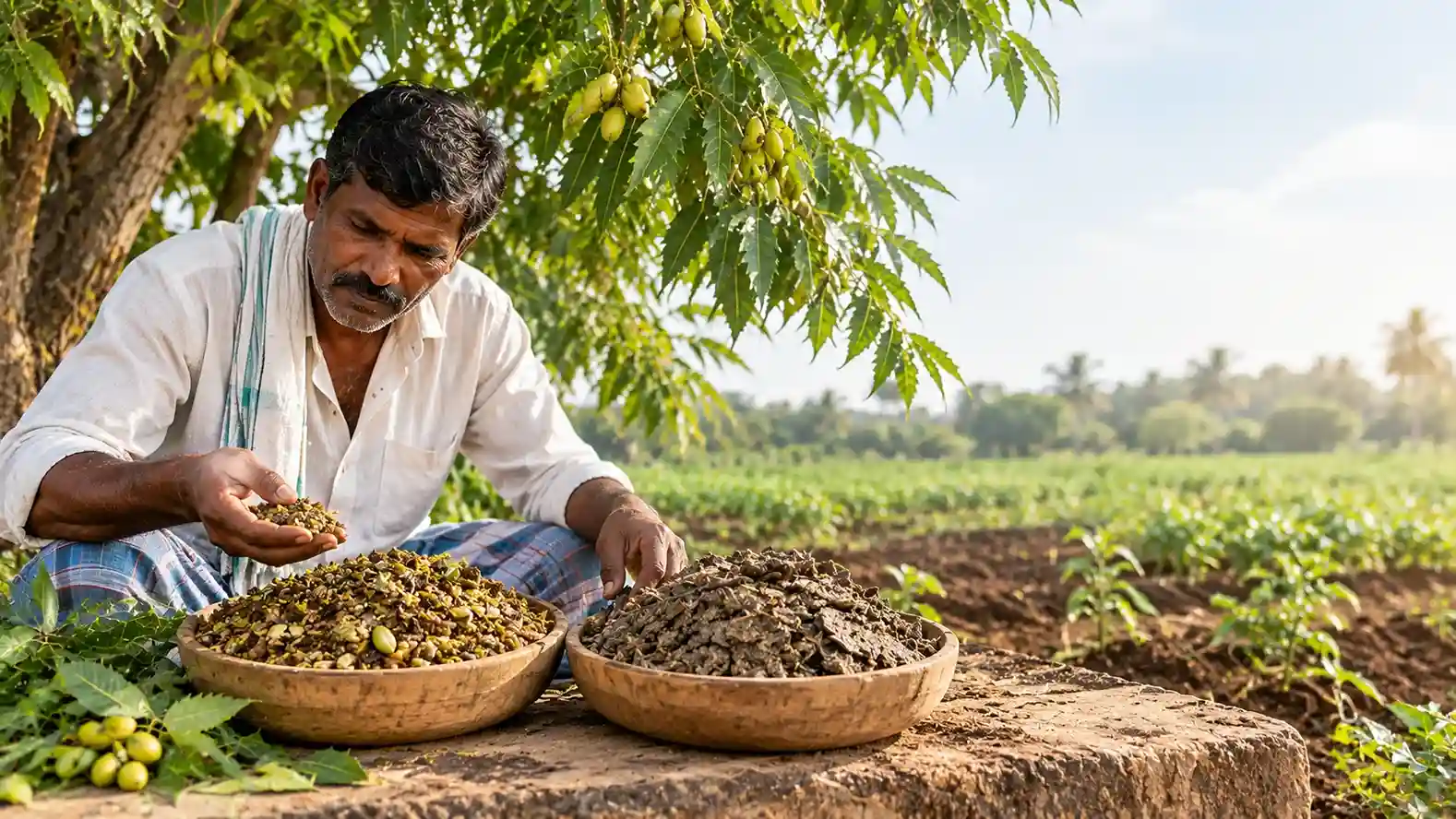
Crushed neem seed and neem cake are often used interchangeably, but they're not the same thing — the key difference comes down to whether the oil has been extracted before or after processing.
Here's the simple version: crushed neem seed is the whole seed, crushed, with its natural oil still in it. Neem cake is what's left over after that oil has been pressed out. Same starting point, two different end products — and that one difference changes how each is typically used. Let's break it down properly.
What Is Crushed Neem Seed?
Crushed neem seed is exactly what it sounds like — neem seeds that have been crushed into smaller pieces or a coarse powder, without removing the oil inside them. Because the oil stays intact, the seed keeps its natural compounds in a more concentrated form.
In organic farming, crushed neem seed is traditionally used as a general soil input — something growers work into the ground to support overall soil health. It's a raw, minimally processed product, which is part of why some farmers prefer it over more processed alternatives.
What Is Neem Cake?
Neem cake starts out the same way — as neem seeds — but goes one step further. The seeds are pressed to extract neem oil (often for use in other products), and what remains after that pressing is neem cake. It's essentially a by-product of oil extraction, not a standalone raw seed product.
Because most of the oil has already been removed, neem cake has a different composition than the original seed. It's still widely used in organic farming, just for slightly different reasons than crushed neem seed.
Crushed Neem Seed vs Neem Cake — Key Differences
The easiest way to see the difference is side by side.
|
Crushed Neem Seed |
Neem Cake |
|
|
What it is |
Whole seed, crushed |
Leftover residue after oil extraction |
|
Oil content |
Oil retained |
Oil mostly removed |
|
Processing level |
Minimal |
One extra processing step (oil pressing) |
|
Form |
Coarse crushed seed |
Powder, flakes, or pellets |
|
Common use |
General soil input |
Soil conditioning and traditional pest management |
Production Process
Crushed neem seed skips the oil-extraction step entirely — the seed is simply crushed and used as is. Neem cake, on the other hand, only exists because of that extraction step. It's the material left behind once the oil has been pressed out for separate use.
Composition Differences
Since crushed neem seed still holds its natural oil, it tends to retain more of the seed's original compounds. Neem cake, having gone through oil extraction, generally has a different nutrient and oil profile compared to the raw seed — this varies by manufacturer and process, so it's worth checking with your supplier rather than assuming a fixed number.
Common Traditional Uses
Both are used in organic farming, but not always for identical purposes. Crushed neem seed is generally worked into soil as a raw organic input. Neem cake is more commonly used as a soil conditioner and is a long-standing traditional choice in Indian farming for general crop care.
Which One Should You Choose?
Honestly, there's no universal "better" option here — it depends on what you're trying to do.
If you want a raw, minimally processed input to work into your soil, crushed neem seed is the simpler choice. If you're looking for something that's already been through processing and is commonly used as a soil conditioner, neem cake is the more traditional pick.
Organic Shakthi's own product range includes Crushed Neem Seed and Soaked Neem Seed, both aimed at farmers and growers who prefer working with the raw seed rather than a processed by-product. If that fits how you like to manage your soil, it's worth a look.
Common Myths About Neem Seed and Neem Cake
Myth: They're the same product, just different names.
Not quite. They start from the same seed, but the oil-extraction step is what actually separates them into two different products.
Myth: One is always more effective than the other.
Neither is universally "better." What works best depends on your soil, your crop, and what you're trying to address — not a blanket rule.
Myth: Higher oil content always means better results.
Oil content is just one factor among several. It doesn't automatically translate into better outcomes on its own, and treating it that way oversimplifies how soil inputs actually work.
Where Crushed Neem Seed Fits Into Organic Farming
Crushed neem seed has long been part of traditional organic farming practices in India, generally used as a raw soil input alongside other organic materials like cow dung manure. It's not meant to replace a full soil-care routine on its own — it works best as one part of a broader, consistent approach to organic farming, alongside good manuring and basic soil maintenance.
Curious whether Crushed Neem Seed fits your organic farming routine? Talk to the Organic Shakthi team to learn more.