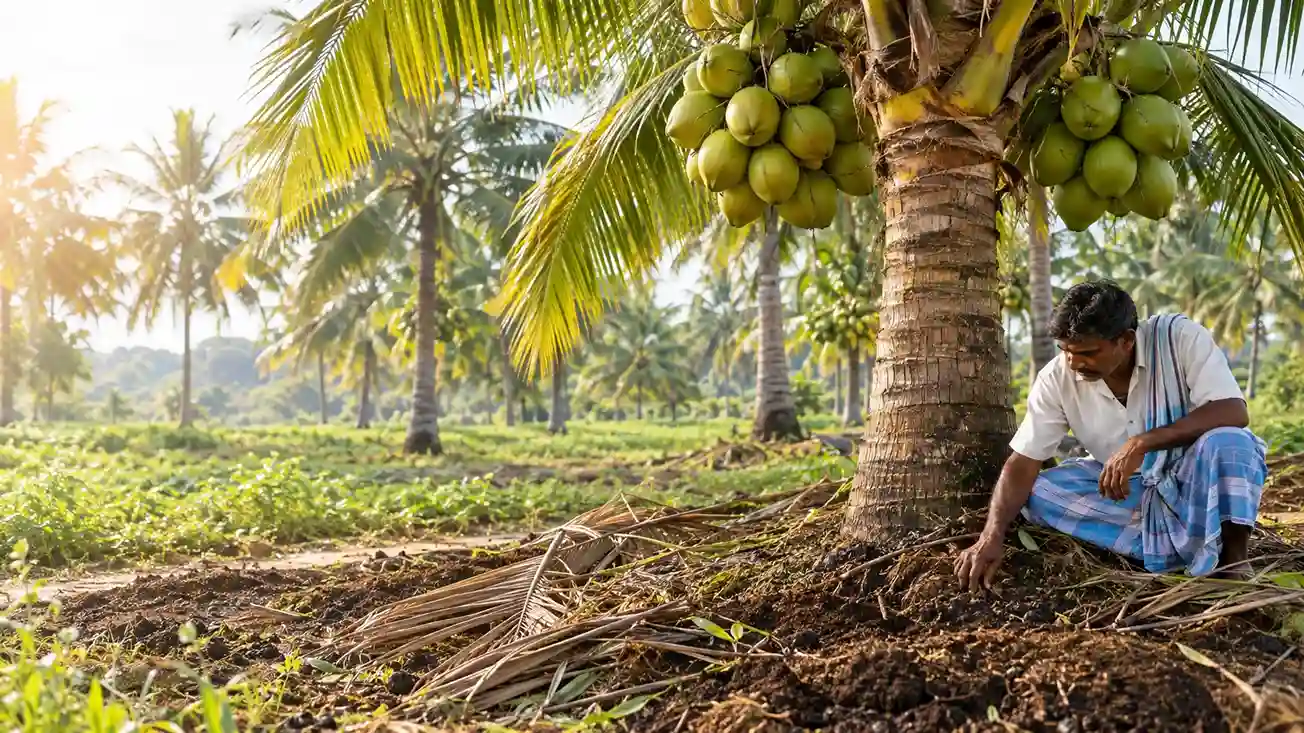
The most effective natural ways to boost coconut yield are consistent soil moisture, steady organic nutrition, and healthy root care. Palms that get these three basics right, season after season, tend to perform noticeably better than those relying on manure or chemicals alone.
If your coconut trees are giving fewer nuts than they used to, it's rarely just one thing. More often it's a slow build-up — tired soil, uneven manuring, roots under stress you can't see from the surface. The encouraging part is that a lot of this responds well to organic inputs and natural coconut tree care, without leaning entirely on chemical fertilizers. Whether you're managing a coconut farm or just have a few palms in your backyard, the basics stay the same. Here's what actually helps.
What Affects Coconut Yield Naturally
Before getting into solutions, it helps to know what a coconut palm needs to perform well. Along with palm age, variety, and spacing, three factors matter most:
-
Soil moisture – Coconut roots need steady moisture, especially through dry spells. Palms under prolonged water stress can shed young nuts before they mature.
-
Steady organic nutrition – Coconut palms generally respond better to a consistent supply of organic matter than to sudden, heavy chemical feeding.
-
Healthy, pest-free roots – Soil pests often affect the root zone quietly, well before any visible damage shows above ground.
These aren't the only factors influencing yield, but they're the ones a grower can actively manage through organic practices — which is what this guide focuses on.
Organic Inputs for Coconut Yield That Actually Help
None of these work as a one-time fix. They build results gradually, over seasons, not weeks.
Cow Dung for Coconut Trees — When and How to Apply
Timing matters more than most people expect. Applying cow dung manure closer to the start of the monsoon works better than applying it during peak summer heat, since the soil holds onto both moisture and nutrients more effectively during that window.
A common practice is to dig a shallow basin around the palm base, spread the manure evenly, and lightly cover it with soil so nutrients stay near the root zone instead of washing off. Cow dung manure remains one of the most widely used organic inputs for coconut palms — it improves the soil's water-holding capacity and rebuilds organic matter in ground that's often been cultivated continuously for years.
Neem for Coconut Trees — Supporting Root and Soil Health
Soil pests are one of the more overlooked reasons coconut yield slips. They work at the root zone, out of sight, so by the time fronds look pale or nuts start dropping early, some damage is already underway.
Neem-based inputs are traditionally worked into the soil around the base to support root health and make the surrounding soil less hospitable to common soil pests. If manuring has been consistent but yield still hasn't picked up, adding a neem-based input like Crushed Neem Seed to your soil care routine can fill that gap.
Organic Manure for Coconut Palm — Getting the Timing Right
A common mistake is treating manuring as a once-a-year task and forgetting about it the rest of the time. Coconut palms respond better to a steady rhythm — usually once or twice a year, timed around the soil's moisture cycle — than to one heavy dose followed by months of nothing.
Mulching for Moisture Retention
This step gets skipped more often than it should. Dried coconut husks, leaves, or other farm waste spread around the base help the soil hold moisture longer, keep weeds down, and slowly break down into organic matter themselves. In regions with long dry stretches — common across many coconut-growing belts in Tamil Nadu and South India — mulching alone can meaningfully ease the moisture stress a palm goes through between rains.
Coconut Tree Care Tips for Consistent Yield Season After Season
A simple, steady routine beats a complicated one:
-
Manure around the start of the moisture season, not in peak dry heat
-
Add neem-based inputs where root pests have been a recurring issue
-
Mulch the base year-round, not just in summer
-
Keep the crown and base clean — clear dried fronds and weeds regularly
-
Stick with one consistent approach across seasons instead of switching often
This applies whether you're managing several acres of coconut cultivation or just a handful of palms at home — the underlying care doesn't change much with scale.
Common Mistakes That Quietly Reduce Coconut Yield
Even growers doing most things right sometimes see slower results because of a few avoidable habits:
-
Depending on a single input. Cow dung alone or neem alone rarely covers everything a palm needs — they work better together.
-
Applying manure to dry soil. Without enough existing moisture, the palm can't use the added nutrients well.
-
Ignoring basic upkeep. Manuring can't fully offset a palm surrounded by weeds or sitting in waterlogged soil.
-
Expecting quick results. Organic inputs rebuild soil health gradually — results tend to show up over seasons, not weeks.
Coconut palms are long-lived, slow-responding trees, so changes in soil health take time to reflect in yield. A steady routine, kept up season after season, tends to be more dependable than switching approaches every year.
Where Organic Shakthi Fits In
If you're building this kind of routine, Organic Shakthi offers Pure Cow Dung and Enhanced Cow Dung for soil and moisture support, along with Crushed Neem Seed and other neem-based input for root and soil care. These are meant to support the practices above, alongside good basic palm maintenance — not replace it.
Looking for organic inputs to support your coconut palms naturally? Talk to the Organic Shakthi team.