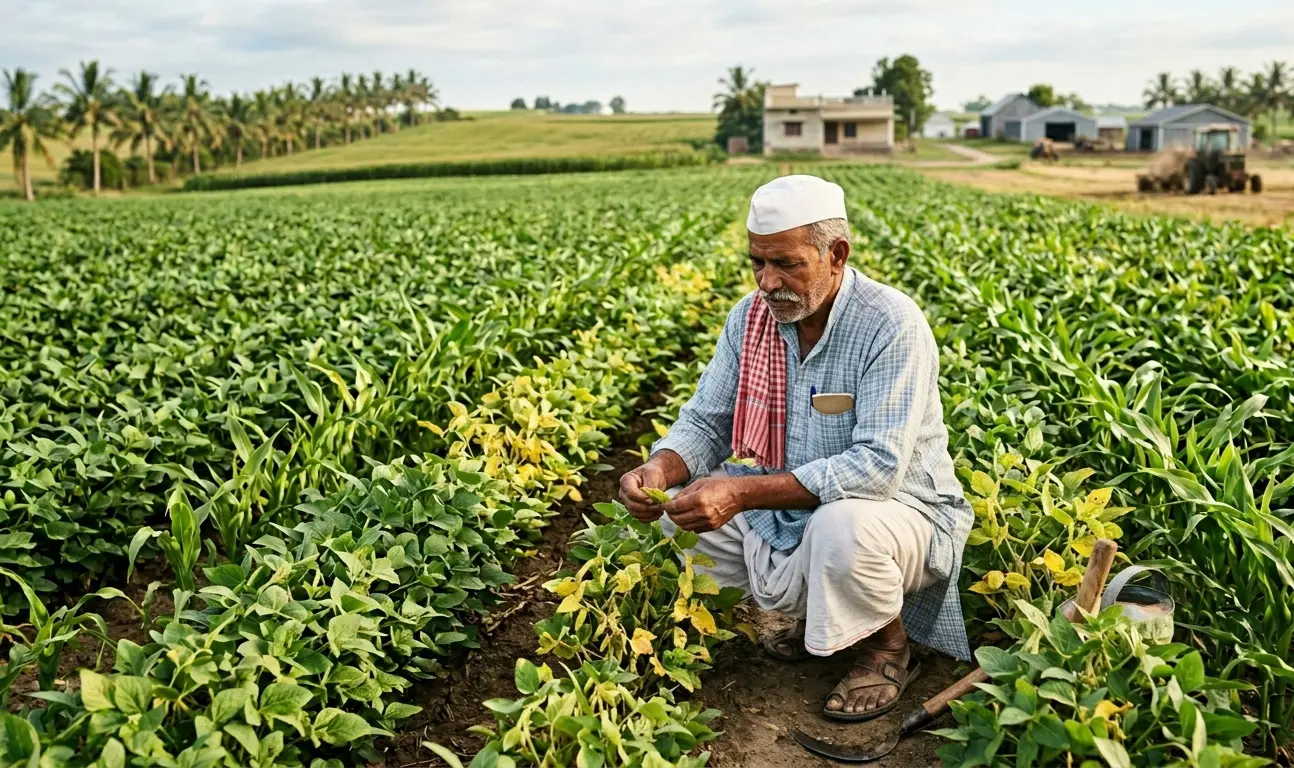
Causes of Soil Fertility Loss and Low Crop Yield
Farmers are facing soil fertility loss and low crop yield today mainly because of repeated chemical fertilizer use, continuous cropping, declining organic matter, pest pressure and changing climate conditions. These factors are gradually weakening soil health and reducing the soil’s natural ability to support healthy crop growth.
As soil quality declines, many farms experience weak germination, poor root development, low moisture retention, increasing pest activity and unstable crop production. In many cases, farmers spend more on fertilizers and pesticides while crop performance continues to decline across farming seasons.
At Organic Shakthi, we understand the growing challenges farmers face in maintaining healthy soil and stable crop yield. Natural farming inputs and sustainable soil management practices are becoming increasingly important for improving long term soil fertility, reducing chemical dependency and supporting better agricultural productivity.
What Is Soil Fertility in Farming?
Soil fertility refers to the soil’s ability to support healthy crop growth by supplying nutrients, moisture balance, microbial activity and proper root conditions.
Healthy fertile soil helps:
-
roots grow properly
-
crops absorb nutrients efficiently
-
maintain water balance
-
support strong plant development
-
improve long term productivity
When soil fertility declines, crops struggle to grow evenly and become more vulnerable to pests, diseases and climate stress.
Why Soil Fertility Is Declining in Modern Farming
Excessive Chemical Fertilizer Use
One of the major reasons for declining soil fertility is the excessive use of chemical fertilizers over long periods. Many farms depend heavily on nitrogen-based fertilizers while using lower levels of balanced nutrients and organic matter.
Over time, this weakens the natural biological activity in soil. Beneficial microbes reduce gradually, soil structure becomes hard and nutrient absorption efficiency starts decreasing.
As a result, farmers often apply more fertilizer each season but receive lower response from crops.
Repeated Cropping Without Soil Recovery
Continuous cultivation without proper soil recovery removes nutrients from the land faster than the soil can naturally rebuild them.
In repeated cropping systems:
-
soil nutrients become depleted
-
microbial activity reduces
-
soil organic matter declines
-
root zone strength becomes weaker
This is commonly seen in intensive farming systems where crops are grown continuously without crop rotation or organic soil improvement methods.
Declining Soil Organic Matter
Soil organic matter also supports beneficial microbial activity, which helps maintain long-term soil health and balanced nutrient cycling. It improves soil softness, supports water retention and helps nutrient movement within the soil.
When organic matter decreases:
-
soil becomes dry and compact
-
water retention reduces
-
nutrient availability declines
-
crop roots struggle to spread properly
Many chemically affected farming lands now show low organic carbon levels because natural soil recovery practices are not regularly followed.
Soil Erosion and Topsoil Loss
Heavy rainfall, improper land management and exposed soil surfaces often lead to topsoil erosion. The upper layer of soil contains most of the nutrients and biological activity needed for healthy crop growth.
Once topsoil is lost:
-
fertility decreases rapidly
-
moisture balance gets affected
-
crop productivity becomes unstable
This problem is becoming more serious in lands where natural soil cover and organic farming methods are limited.
Climate Change and Heat Stress
Changing climate conditions are also affecting soil fertility and crop yield stability. High temperatures, irregular rainfall, drought conditions and excessive moisture create stress for both soil and crops.
Heat stress often affects:
-
root activity
-
flowering stages
-
nutrient absorption
-
soil moisture balance
In rainy seasons, excess moisture can increase fungal activity and pest pressure in farming fields.
Improper Water Management
Excess irrigation and poor drainage systems damage soil structure over time. Waterlogged soil reduces oxygen movement near roots and weakens microbial activity.
At the same time, dry farming lands with low moisture retention create stress during crop development stages.
Balanced water management is important for maintaining healthy soil conditions throughout the farming cycle.
Why Farmers Are Facing Low Crop Yield
Weak Root Development
Healthy roots are necessary for nutrient and water absorption. In damaged or nutrient-deficient soil, root systems become weaker and smaller.
This affects:
-
plant stability
-
nutrient uptake
-
crop growth speed
-
final yield quality
Nutrient Imbalance in Soil
Many fields now show nutrient imbalance because of continuous chemical dependency and lack of organic soil support.
When soil lacks balanced nutrients:
-
leaves become weak
-
growth slows down
-
flowering reduces
-
crop recovery becomes poor
Even if fertilizers are applied regularly, crops may not respond properly in unhealthy soil conditions.
Increasing Pest Pressure
Weak soil often creates weak crops. Crops grown in stressed soil conditions become more vulnerable to pests and fungal problems, especially during early growth stages.
Farmers commonly face:
-
root damage
-
leaf stress
-
nursery infections
-
pest outbreaks during humid seasons
This further reduces crop productivity and increases farming expenses.
Reduced Fertilizer Efficiency
Many farmers now notice that fertilizer response is becoming weaker compared to previous years.
This happens because:
-
soil biology has declined
-
nutrient cycling is affected
-
soil structure has weakened
As a result, farmers spend more on farming inputs while productivity improvement remains limited.
Natural Ways to Improve Soil Fertility and Crop Yield
-
Use Organic Farming Inputs
-
Improve Soil Organic Matter
-
Follow Crop Rotation Practices
-
Reduce Excess Chemical Dependency
-
Improve Moisture Management
Role of Organic Inputs in Sustainable Farming
Neem-based farming products and cow dung-based organic inputs are widely used in natural farming systems for improving soil condition and supporting crop stability.
These inputs are commonly used for:
-
soil preparation
-
nursery support
-
compost improvement
-
pest management
-
moisture balance
Farmers often include them as part of regular farming cycles where soil health improvement is a long term priority.
Conclusion
Soil fertility loss and low crop yield are increasing because of repeated chemical use, poor soil recovery, declining organic matter and changing climate conditions. These problems affect long term crop stability and overall farming productivity.
At Organic Shakthi, we support sustainable farming with natural farming inputs like crushed neem seed, neem leaves powder, pure cow dung, enhanced cow dung and soaked neem seed for long term soil health and practical field use.